
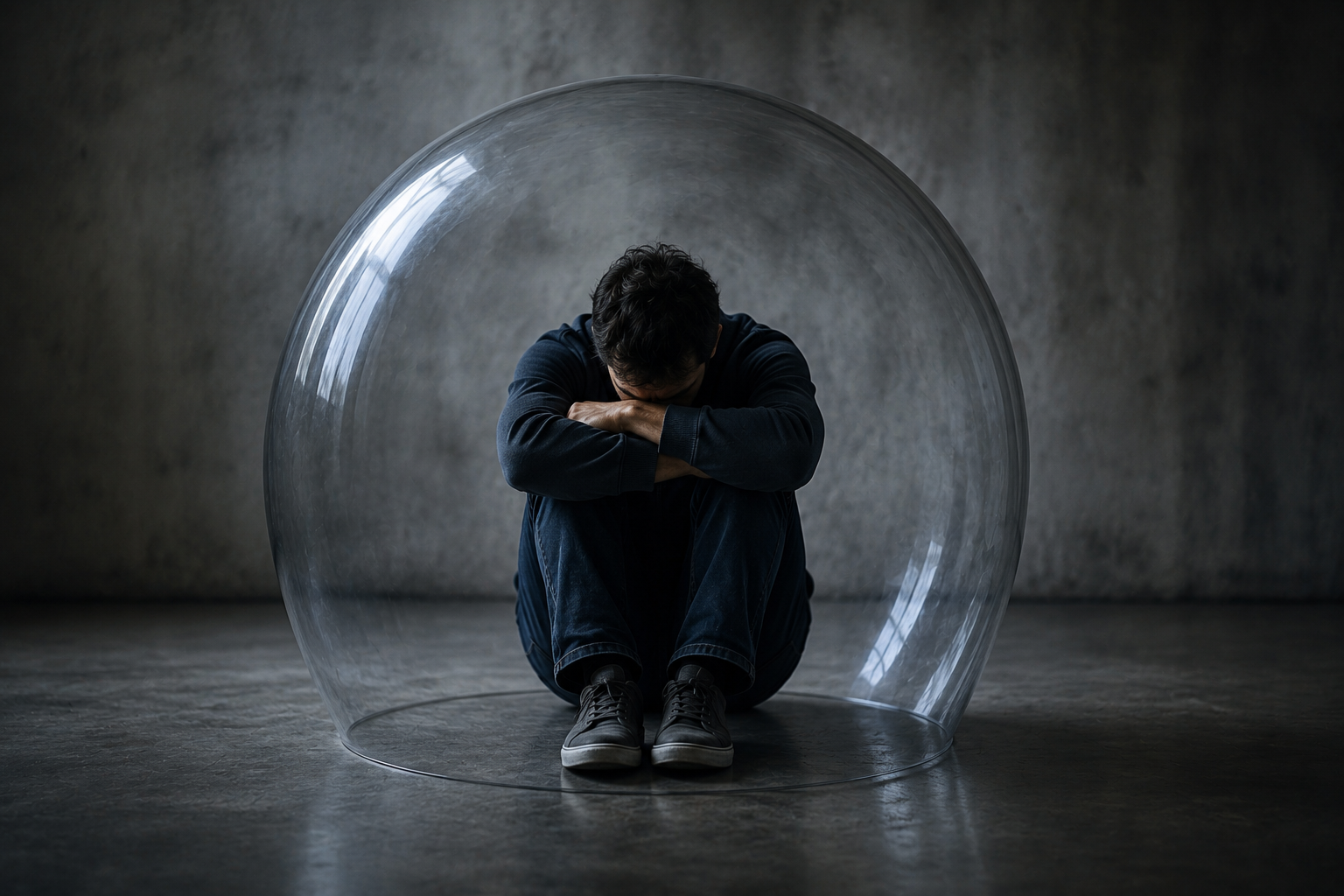
“You just need to be more vulnerable.”
It has become a common message in books, podcasts and social media. Vulnerability is often described as a strength, something that deepens relationships, builds trust and allows people to live more authentically. While there is truth in this idea, it is not how vulnerability feels for many people.
At Blue Healers Counselling in Brisbane’s western suburbs, we regularly meet people who do not experience vulnerability as strength. Instead, they experience it as risk.
For someone who grew up in an environment where emotions were dismissed, criticised or ignored, expressing vulnerability may have led to embarrassment rather than connection. For someone who has experienced betrayal, emotional abuse or repeated rejection, opening up can feel dangerous rather than liberating. Others may have learned through their workplace, culture or family that showing emotion is interpreted as weakness, incompetence or a lack of resilience.
From this perspective, avoiding vulnerability is not a character flaw. It is often a strategy that once made sense.
The brain is designed to learn from experience. If expressing fear, sadness or uncertainty has repeatedly resulted in criticism or emotional pain, the nervous system begins to anticipate those outcomes. Over time, people may become highly self-reliant, avoid asking for help, minimise their own needs or keep difficult emotions hidden. These strategies can be remarkably effective at helping people function, particularly in demanding occupations or leadership roles.
The difficulty is that the strategies that protect us from emotional pain can also prevent emotional closeness. Partners may describe someone as distant or emotionally unavailable when, in reality, they have simply become very good at protecting themselves.
Vulnerability is not about sharing everything with everyone. Healthy vulnerability involves choosing appropriate people, appropriate moments and appropriate levels of openness. It develops within relationships where there is trust, respect and emotional safety.
Research consistently demonstrates that secure relationships are built upon emotional responsiveness rather than perfection. When people experience acceptance rather than judgement, they are more likely to express difficult emotions, seek support and resolve conflict constructively. This does not happen because someone tells them to “be vulnerable.” It happens because the relationship becomes safe enough for vulnerability to emerge naturally.
For some people, counselling provides the first experience of speaking openly without fear of being criticised, dismissed or judged. Rather than encouraging vulnerability for its own sake, counselling aims to understand what vulnerability has meant throughout a person’s life and whether those old protective strategies are still serving them today.
If vulnerability has always felt like weakness, there is often a reason. Understanding that reason can become the first step towards building relationships where openness no longer feels unsafe, but instead becomes a pathway to greater connection, confidence and emotional wellbeing.
References
Brown, B. (2012). Daring Greatly. Gotham Books.
Johnson, S. M. (2019). Attachment Theory in Practice: Emotionally Focused Therapy (EFT) with Individuals, Couples, and Families. Guilford Press.
Porges, S. W. (2011). The Polyvagal Theory: Neurophysiological Foundations of Emotions, Attachment, Communication, and Self-Regulation. W.W. Norton & Company.
Siegel, D. J. (2020). The Developing Mind (3rd ed.). Guilford Press.